Leak Detection & Repair Saint Johns FL
Some leaks announce themselves. Others show up as a stain, a musty cabinet, a warm patch of floor or a bill that climbed for no reason. Finding the source first keeps the repair small.
Call to discuss your plumbing problem and check available service options. Availability varies by provider, location and type of work.
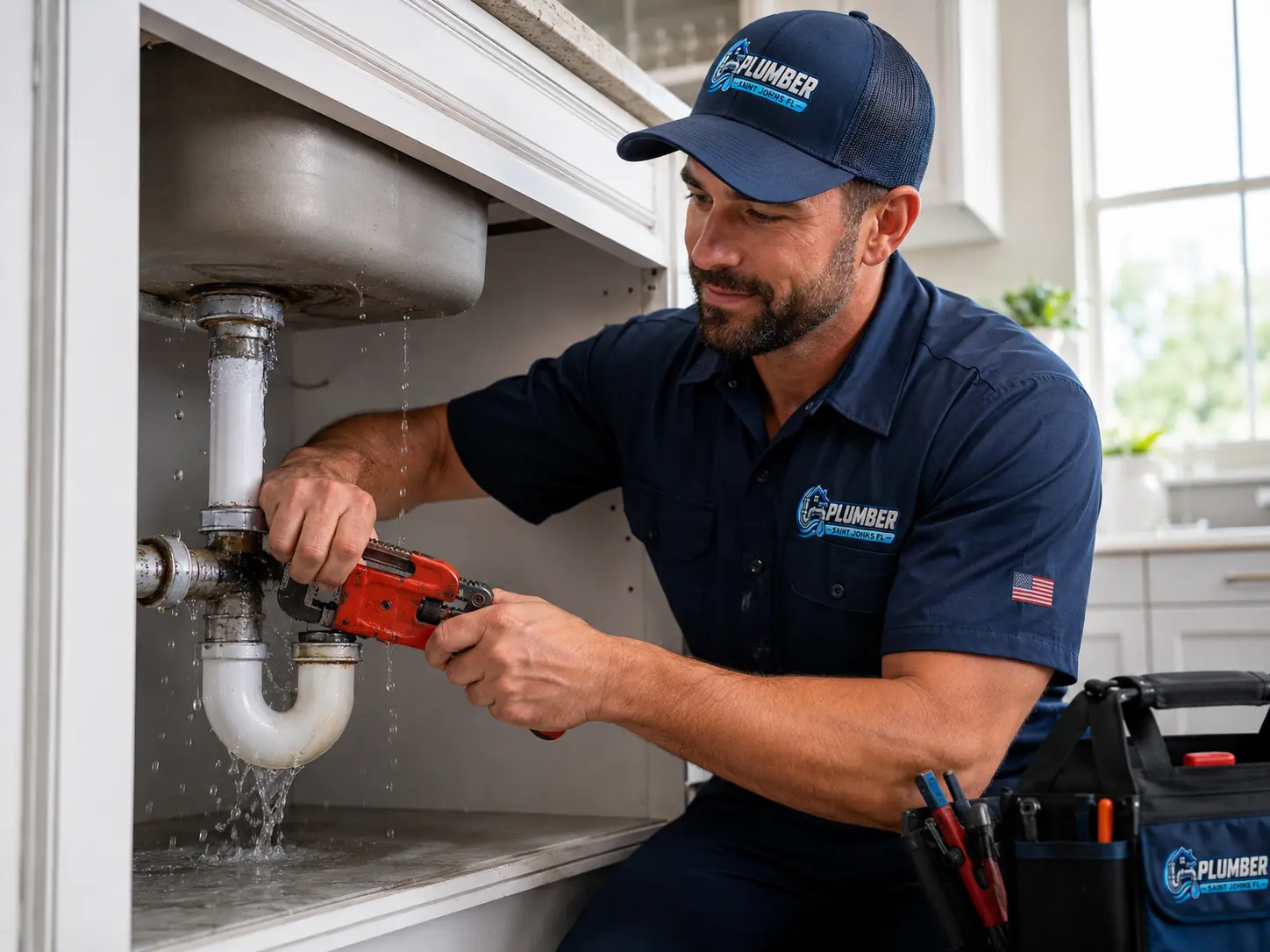
The expensive part of a leak is almost never the plumbing repair. It is the drywall, cabinetry, flooring and insulation that absorbed water while nobody knew the leak existed. That is why locating the source accurately matters more than reaching it quickly: opening the wrong wall adds damage without finding anything.
This page covers the signs homeowners notice first, where leaks tend to originate, what the process of finding one looks like, and which checks you can safely make before calling.
Signs of a Water Leak
- A water bill that rose without any change in household use
- Stains or discoloration spreading on a ceiling or wall
- Paint that bubbles, or drywall that feels soft or cool
- A musty smell inside a vanity or kitchen cabinet
- A warm spot on a tile or vinyl floor
- Flooring that lifts, cups or separates at a seam
- The sound of running water with every fixture shut off
- Persistent damp mulch or standing water near the foundation or meter
- Reduced water pressure with no other explanation
Where Leaks Usually Start
- Supply connections
- Braided hoses, angle stops and compression fittings under sinks and behind toilets are the most frequent culprits.
- Fixture components
- Worn faucet cartridges, failed toilet flappers and cracked tailpieces leak continuously but quietly.
- Drain joints
- Slip joints and trap connections loosen over time, dripping only while the fixture is in use.
- Pipe corrosion
- Pinholes develop in aging copper; galvanized steel restricts and weeps at threaded joints.
- Slab and underground lines
- Supply lines routed beneath a slab can leak for a long time before surfacing.
- Water heater fittings
- Inlet and outlet connections, drain valves and relief valves are common leak points on aging units.
- Shower valves and pans
- Failed valve bodies and pan liners leak into the framing rather than into the room.
- Appliance lines
- Ice maker tubing, dishwasher supplies and washing machine hoses fail without warning.
How a Leak Is Located and Repaired
The first question is whether the leak is on the pressurized supply side or the drain side, because they behave differently. A supply leak runs constantly and will show on the meter. A drain leak only appears when the fixture above it is used, and it will not register at the meter at all. Establishing which one you have narrows the search dramatically.
Next comes isolating the area. Shutting individual fixture valves and rechecking the meter can rule out large parts of the system. Accessible connections, cabinet interiors, water heater fittings and visible piping in attics or garages are inspected before anything concealed is considered, because most leaks turn out to be at a connection someone can reach.
Only when the accessible points are cleared does attention move to concealed lines, and the aim is still to open the smallest area that can confirm the source. Repair depends on what is found: replacing a supply hose or angle stop is straightforward, a section of failed pipe is cut out and replaced, and a fixture-level failure is handled at the fixture. When the same line has failed repeatedly, replacing it makes more sense than another patch, which is where repiping enters the discussion.
When to Call a Plumber
- Your meter moves with every fixture and appliance shut off
- A stain is growing or reappearing after being painted over
- You notice a warm area on the floor of a slab-built home
- Water appears in a location with no plumbing directly above it
- A cabinet or closet smells musty with no visible source
- A previously repaired leak has returned
Call 904-606-8252 to discuss your plumbing problem and check available service options in Saint Johns.
What You Can Safely Check
Safe to check yourself
- Run the meter test with all water use stopped
- Dye-test toilets for silent flapper leaks
- Feel supply connections under sinks with a dry paper towel
- Check the pan and floor around the water heater
- Inspect washing machine and ice maker hoses for bulging or rust
- Close the stop valve on a leaking fixture to stop the flow
Leave to a plumber
- Cutting into walls, ceilings or slab to look for a source
- Tightening a corroded fitting hard enough to break it
- Sealing an active leak with tape or putty and leaving it
- Ignoring damp drywall on the assumption it will dry out
- Disturbing suspected damaged materials without protection
- Restoring pressure to a line before the failure point is known
Leaks in Saint Johns Homes
Slab-on-grade construction is the norm across most Saint Johns subdivisions, from Durbin Crossing through the RiverTown area, and it changes how a supply leak presents. Without a crawl space, there is no easy vantage point underneath, so early evidence tends to be a warm floor, an unexplained meter reading or a bill that keeps climbing rather than a visible drip.
Two-story homes add a different pattern: an upstairs bathroom or laundry leak reveals itself through the ceiling below, sometimes at a distance from the actual source. In older properties near Fruit Cove and along State Road 13, mixed piping from years of partial repairs means one section’s condition says little about the next. Florida humidity compounds all of it, because materials that stay damp inside a closed cabinet do not dry on their own.
If the leak turns out to be at a fixture, see faucet and sink repair or toilet repair. If water is actively spreading right now, start with emergency plumbing steps.
Plumber Saint Johns FL helps homeowners find plumbing information and connect with available plumbing service providers. Service may be performed by an independent plumbing provider. Availability varies by provider, location and type of work.
Frequently Asked Questions
How can I test for a leak using my water meter?
Turn off every fixture and water-using appliance in the house, including ice makers and irrigation. Write down the meter reading or note the position of the low-flow indicator, then wait 30 to 60 minutes without using water. If the reading has changed or the indicator has moved, water is leaving the system somewhere. This test confirms a leak exists but not where it is, and it will not catch a drain-side leak, since drain water has already passed the meter.
What are the warning signs of a slab leak?
Common indicators include an unexplained warm area on a tile or vinyl floor, the sound of running water when everything is off, flooring that lifts or discolors in one spot, a persistent damp smell near the base of a wall, cracks appearing in flooring or baseboards, and a rise in the water bill with no change in habits. Any one of these on its own can have another explanation, but two or more together on a slab-built home is worth investigating rather than watching.
Can a leak be behind a wall with no visible water?
Yes, and it is common. Water follows the path of least resistance along studs, pipe runs and wiring, so it may travel several feet before it saturates anything you can see. Early signs tend to be subtle: paint that looks slightly different in one area, a baseboard that has swelled at the bottom edge, a faint musty odor in a closet, or drywall that feels cooler to the touch. In Florida humidity, microbial growth can start before the stain appears.
Is a running toilet actually a leak?
It is one of the most common water losses in a home. A flapper that no longer seals lets water pass continuously from tank to bowl, and because it drains away quietly there is nothing to see. A simple check is to add a few drops of food coloring to the tank, wait 15 minutes without flushing, and look in the bowl. Color in the bowl means the flapper is leaking. That is repairable with inexpensive parts and is covered under toilet repair.
How urgent is a small drip under the sink?
More urgent than it looks. A slow drip keeps the cabinet base, the wall behind it and often the subfloor damp continuously, which is what causes swelling, delamination and odor rather than the volume of water itself. It also tends to be a symptom: a loosening compression nut, a failing supply hose or a cracked tailpiece rarely improves on its own. Place a container under it, close the stop valve if the fixture can be spared, and have it looked at.
Will my water bill show a hidden leak?
Often, but not always immediately. A pinhole in a supply line may add only a modest amount at first and get lost in seasonal variation, especially in months when irrigation use changes. The more useful comparison is against the same month in previous years rather than against last month. A bill that rises steadily over several cycles with no change in household size or habits is a meaningful signal, and it is worth pairing with the meter test above.
Service Areas
Serving Saint Johns and nearby communities including:
Other Plumbing Services
Suspect a Water Leak in Saint Johns?
Describe what you're seeing — a stain, a smell, a warm floor or a bill that jumped — and call to discuss the problem and check current availability.
Call to check current service availability in Saint Johns.