Water Heater Repair Saint Johns FL
No hot water, showers that turn cold early, rumbling from the tank, rusty water or dampness at the base are all reasons to have a water heater looked at before it fails.
Call to discuss your plumbing problem and check available service options. Availability varies by provider, location and type of work.
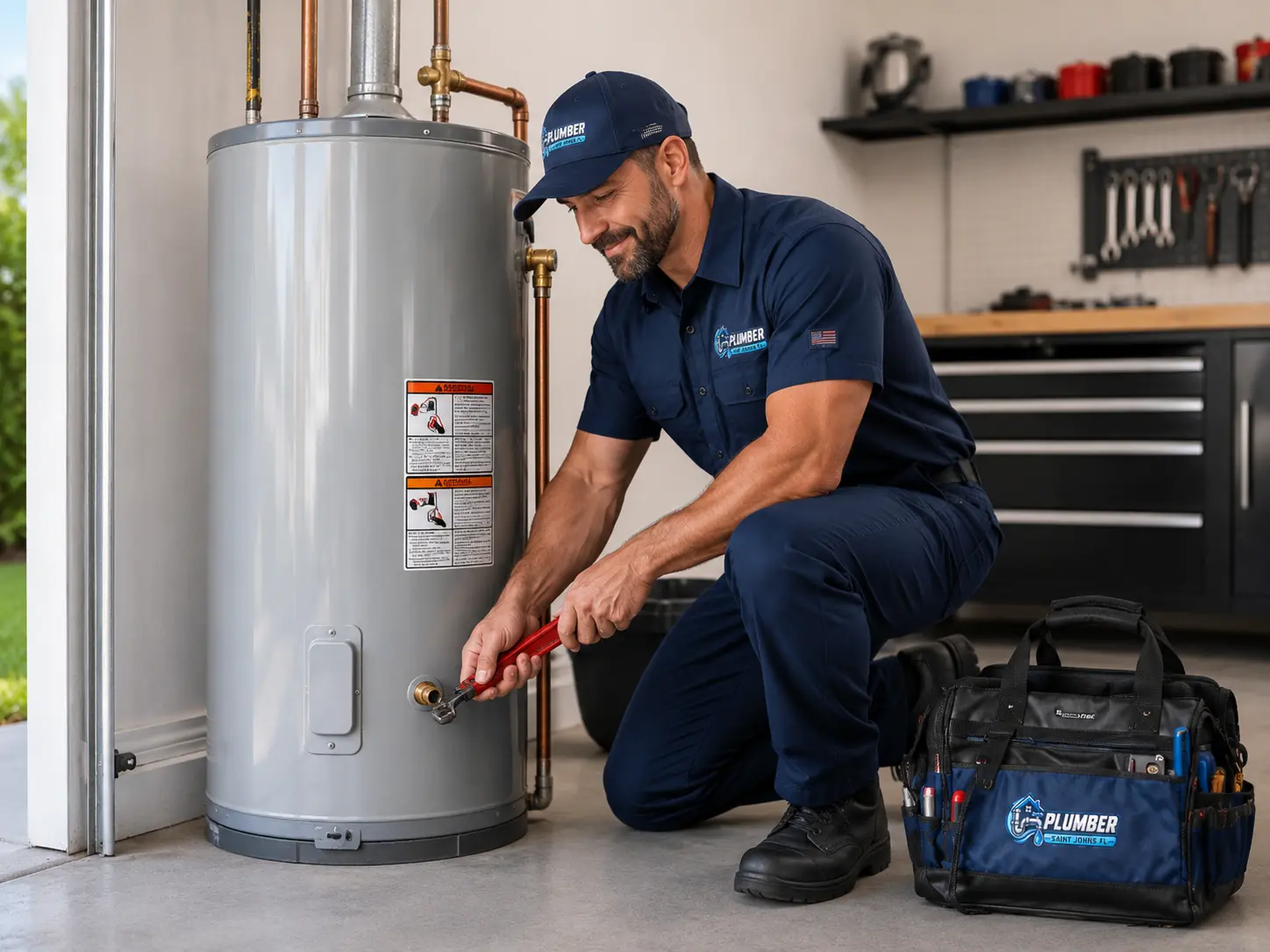
Water heaters usually give warning before they quit. The shower gets shorter, the tank starts making noise, the hot water looks tinted at first draw, or a small ring of moisture appears on the garage floor. Those symptoms are worth acting on, because a planned repair or replacement is a very different experience from a tank that lets go while nobody is home.
This page explains what each symptom typically means, what service involves, and how to think about repairing versus replacing a unit.
Symptoms to Pay Attention To
- No hot water at any fixture
- Hot water that runs out much sooner than it used to
- Water that is lukewarm no matter how the thermostat is set
- Rumbling, popping or crackling from the tank
- Rusty or discolored water at the hot tap
- A metallic or sulfur smell in the hot water only
- Moisture, rust staining or standing water at the base
- The relief valve discharging periodically
- A pilot light or burner that will not stay lit
Common Causes
- Sediment accumulation
- Mineral deposits on the tank floor reduce capacity, cause noise and force the unit to work harder.
- Failed heating element
- On electric units, a burned-out lower element leaves you with a fraction of the usable hot water.
- Thermostat failure
- A faulty thermostat delivers water that is too cool, too hot, or inconsistent.
- Anode rod depletion
- Once the sacrificial rod is consumed, corrosion attacks the tank lining itself.
- Gas control or thermocouple
- On gas units, these prevent the burner from lighting or staying lit.
- Dip tube breakdown
- A deteriorated dip tube mixes cold water into the outlet, producing lukewarm supply.
- Relief valve issues
- A T&P valve may discharge due to excess pressure or temperature, or because the valve itself has failed.
- Tank corrosion
- Internal rust eventually perforates the tank; at that point replacement is the only option.
What Water Heater Service Involves
Service starts with identifying the unit type, age and fuel source, because an electric tank, a gas tank and a tankless unit fail in different ways. The data plate gives the manufacture date, which immediately frames whether you are dealing with a mid-life repair or a unit near the end of its expected service.
From there it is a matter of matching the symptom to the component. On electric units that means checking power, thermostats and elements in sequence. On gas units it means the thermocouple, gas control and venting. Sediment-related complaints are addressed by draining and flushing the tank, and connections, the relief valve and the anode rod are inspected while access is open.
Where the tank itself is leaking, no repair applies and the conversation moves to replacement: sizing for the household, choosing between tank and tankless, and confirming that the existing gas, electrical and venting arrangements suit the new unit. Related plumbing sometimes needs attention at the same time, particularly shutoffs and connectors that have corroded in place, which overlaps with fixture and appliance installation work.
When to Call a Plumber
- You have no hot water and resetting the unit did not restore it
- There is water pooling around the base of the tank
- The relief valve is discharging repeatedly
- You smell gas anywhere near a gas-fired unit
- The tank is making loud rumbling or banging noises
- The unit is over ten years old and performance is dropping
Call 904-606-8252 to discuss your plumbing problem and check available service options in Saint Johns.
Safe Homeowner Checks
Safe to check yourself
- Confirm the breaker has not tripped on an electric unit
- Check that the gas supply valve is open
- Look at the thermostat setting before assuming a failure
- Inspect the floor and pan around the tank for moisture
- Note the manufacture date from the data plate
- Shut off water to the heater if it is actively leaking
Leave to a plumber
- Opening the electrical compartment on a powered unit
- Relighting a gas unit when you can smell gas
- Removing or capping a temperature and pressure relief valve
- Raising the thermostat above safe scald limits
- Draining a tank without knowing where the water will go
- Attempting to seal a leaking tank body
Water Heaters in Saint Johns Homes
Most homes here keep the water heater in the garage rather than a basement, which is a mixed blessing. It usually means a leak drains out rather than through finished space, but it also means the unit sits in an unconditioned area where summer heat and humidity work on fittings and jackets year round.
Age patterns follow the neighborhoods. Julington Creek Plantation and the older Fruit Cove streets have many original units well past ten years, so replacement questions come up frequently. In Durbin Crossing and RiverTown, units are newer, and complaints there tend to be about recovery capacity in households with several bathrooms running in the same morning.
If the trouble is water appearing rather than water temperature, start with leak detection. If a tank has already failed and water is spreading, see emergency plumbing.
Plumber Saint Johns FL helps homeowners find plumbing information and connect with available plumbing service providers. Service may be performed by an independent plumbing provider. Availability varies by provider, location and type of work.
Frequently Asked Questions
How long does a water heater usually last?
A conventional tank unit commonly gives eight to twelve years of service, and tankless units often run longer. Water chemistry and maintenance move that range in both directions: a tank that has never been flushed accumulates sediment that insulates the burner or element and shortens its life, while one that is drained periodically and has a maintained anode rod tends to reach the upper end. Age alone is not a reason to replace a working unit, but past ten years it changes how you weigh a repair.
Why does my hot water run out faster than it used to?
The usual explanation is sediment. Minerals settle to the bottom of the tank and occupy volume that used to hold hot water, so the same tank delivers a shorter shower. On electric units, a failed lower element produces the same symptom, since only the upper portion of the tank is being heated. A dip tube that has broken down can also mix incoming cold water into the outgoing hot supply. Each of these has a different remedy, so the cause matters.
What is the rumbling or popping noise from my tank?
That is water boiling underneath a layer of sediment on the tank floor. Steam bubbles force their way up through the deposit and collapse, which produces the popping or rumbling you hear. It is a sign the tank is working harder than it should and running less efficiently. Left alone, the overheating stresses the tank bottom and shortens its remaining life, so it is worth addressing rather than living with.
Is water around the base of the heater always serious?
Not always, but it should never be ignored. Sometimes it traces to a loose drain valve, a fitting at the inlet or outlet, or discharge from the temperature and pressure relief valve, all of which are repairable. What you do not want is seepage from the tank body itself, which means the inner lining has failed and no repair will fix it. Because the two look similar on the floor, the source needs to be identified before the tank fails outright.
Repair or replace — how do I decide?
Weigh the age of the unit, the nature of the failure and the cost of the repair against what a replacement would deliver. Thermostats, elements, relief valves and gas control components are ordinary repairs on a unit with life left in it. A tank leaking from the body is not repairable. Where it gets less clear is a substantial repair on a ten-year-old unit, and there the honest calculation is whether you are buying a couple more years or a fix that will outlast the tank.
Should I consider tankless?
Tankless makes sense for some households and not others. It removes the standby losses of keeping a tank hot and eliminates the run-out problem, and it typically lasts longer. Against that, installation is more involved, gas or electrical capacity may need upgrading, and hard water makes periodic descaling important. If your household regularly exhausts a tank or your utility closet space is at a premium, it is worth discussing before you simply replace like for like.
Service Areas
Serving Saint Johns and nearby communities including:
Other Plumbing Services
Water Heater Trouble in Saint Johns?
Have the unit's age, fuel type and symptoms ready, and call to talk through repair or replacement options and current availability.
Call to check current service availability in Saint Johns.